
Harrison County VINELink Coverage
Kentucky VINE operates statewide and receives data from local jails, adult correctional facilities, mental-health facilities, and certain juvenile systems. For a person tied to Harrison County, it can report the location and status supplied by the source agency. If that person is no longer held, Kentucky says the result can provide a release date. VINE may also send notices for a jail release, county-jail transfer, escape, parole event, or upcoming hearing. These events are not interchangeable. A transfer means custody moved. It does not mean the person went home.
The Harrison County Detention Center path and the Kentucky Department of Corrections path must be read separately. A person may have a local booking record and a KDOC record at the same time or in sequence. Kentucky instructs users to register on both records when both appear. That practice helps track a remand from Harrison custody into state custody. It also prevents a local status change from being mistaken for the end of all custody. VINELink is not the right source for a federal BOP sentence, an ICE custody question, or a general list of everyone released in Harrison County.
Kentucky also offers a telephone access channel at 800-511-1670. The service is free, and notice registration can be anonymous. That option can help when the web search is hard to use, but the same identity and source limits apply. A caller should have the correct name and jail or DOC identifier when possible. Victim Services can assist with VINE at 502-564-5061 or 877-687-6818. These lines help with registration and notice. They do not replace the Harrison Jailer, a KDOC record, or a court file when the question is whether a particular release truly occurred.
Search Harrison County VINELink
Start at the correct state portal and search for one person. A partial name or a jail or DOC identifier can locate candidates. Name-only results need care because people can share names, aliases, or similar dates of birth. The record should be matched with all lawful identifiers shown before any status is attributed to someone. If the person recently left the Harrison County Detention Center, inspect whether the result now points to KDOC or another facility instead of assuming community release.
- Open VINELink and select Kentucky.
- Choose “Find an Offender,” then enter a partial name or jail or DOC ID.
- Compare the available identifiers and open only the matching record.
- Read the current status, location, and event date together.
- Inspect both the local-jail record and DOC record if VINELink returns both.
- Confirm the result with the agency that controlled the custody event.
The public VINELink screen shows the Kentucky selection and “Find an Offender” route. The official VINELink search is the source for the view below.
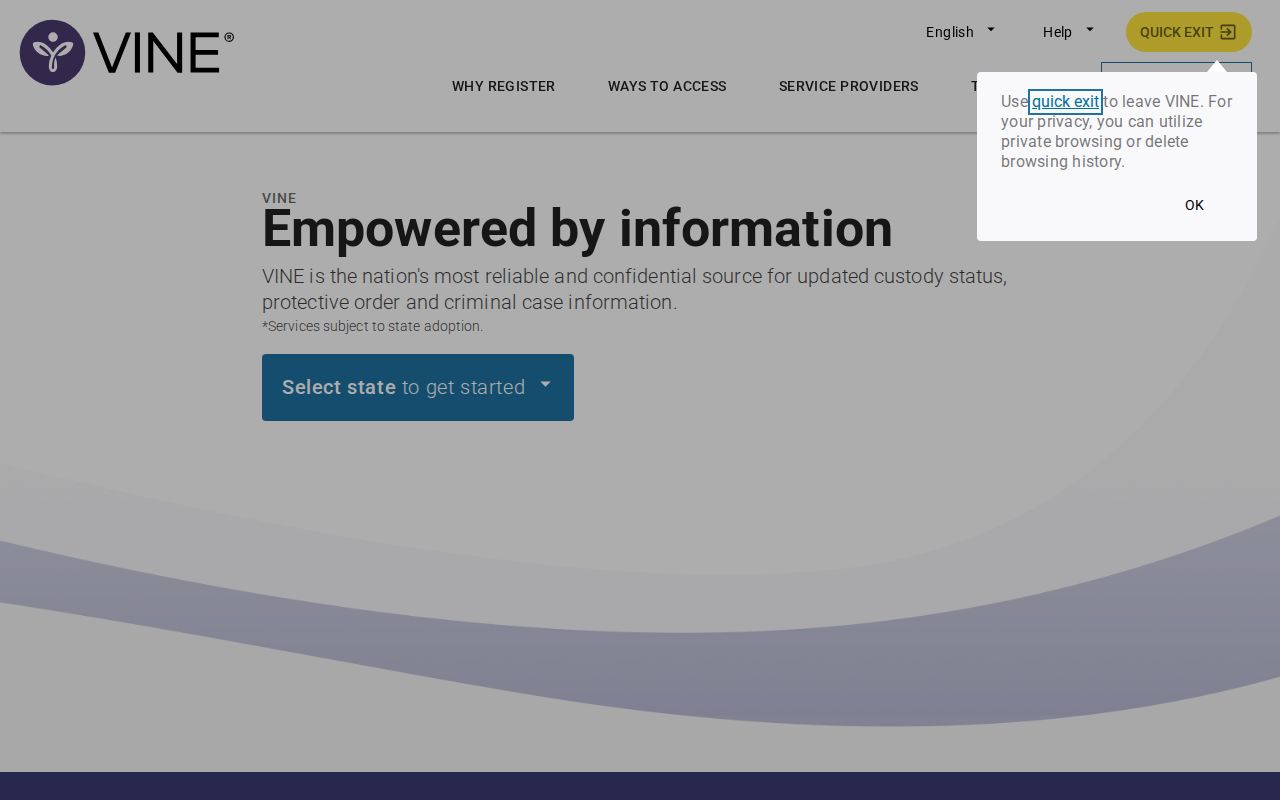
This state-first screen matters because similarly named counties and agencies can lead to the wrong jurisdiction if Kentucky is not selected.
Harrison County Release Fields
A VINE record is designed for identity, status, and notice. It does not reproduce every field from a Harrison booking or release transaction. Read each item in context, especially when a record changes from a local jail to a state corrections location. A person who is shown at an institution remains in custody. A record that reports release should still be checked against the Jailer or KDOC because the source feed can lag or contain an error.
| Field or event | What it can establish |
|---|---|
| Name and offender ID | Helps distinguish the selected person from similar names. |
| Custody status | Reports the status supplied by the participating agency. |
| Current location | Shows the jail, institution, or other reported custody location. |
| Release date | Reports a source-system release event but is not a certified exit entry. |
| Transfer event | Shows a move between custody settings, not community release. |
| Parole or hearing event | Signals a supervision or Board event, not final discharge. |
For durable proof of a Harrison jail exit, ask the County Jailer for the existing booking and release entry, including the recorded date, time, disposition, and destination. For a KDOC offender, compare VINE with Kentucky Offender Online Lookup. KOOL can show an institutional or probation-and-parole location and a projected date, but its projected field is not an actual release timestamp.
The distinction is especially useful after a remand. Harrison’s Sheriff transports prisoners remanded to KDOC, so a person can leave the county detention center and remain incarcerated. In that case, the local release or destination entry documents the handoff, while KOOL identifies the state-corrections path. VINE may report the transfer as a status event. None of those facts, standing alone, should be restated as release to the community. If the court file shows bond or another order, compare its date with the jail transaction because legal authority and physical exit can occur at different times.
Note: A blank field or vanished name never proves community release; Harrison prisoners may instead be remanded or transferred to another agency.
Harrison County Release Alerts
Registration begins from the correctly matched offender record. Kentucky allows telephone and email notice, and registration can be anonymous. A direct telephone number works best because the recipient must enter a PIN. The PIN acknowledges the notice. It is not an offender identifier. Kentucky says a jail-release call can repeat every 30 minutes for up to 24 hours until it is acknowledged. A switchboard that cannot accept keypad entry is therefore a poor choice.
- Select “Notify Me of Status Changes” on the matching record.
- Choose telephone, email, or both and follow the registration prompts.
- Create a four-digit PIN for a telephone registration.
- Enter that PIN when the automated call arrives to acknowledge it.
- Use “Edit Your Registration” to change or cancel notice details.
- Register on both local and DOC records when the same person has both.
Kentucky’s VINE definitions distinguish advanced release, court-order release, shock probation, home incarceration, return to custody, and sex-offender conditional discharge. State-institution notice may be sent 72 hours before release where possible. An immediate credit or court discharge is sent when processed. Timing can differ because the source event differs.
Written notice is another Kentucky channel. A requester may send the inmate’s name or identifier and the requester’s contact details to the Office of Victim Services, P.O. Box 2400, Frankfort, KY 40602. This route concerns a KDOC release notice, not the Harrison jail’s certified release entry. Up to two phone numbers may be registered through the Attorney General channel, while KDOC materials also describe multiple phone and email registrations. Keep contact details current and acknowledge a call promptly so the repeat cycle stops.
- Advanced release
- A notice of a planned release within the period defined by Kentucky VINE.
- Transfer
- A move to another custody location, not freedom from custody.
- Conditional discharge
- A legal status with conditions after custody, not the same as final discharge.
- PIN
- The four-digit code used to acknowledge a telephone alert.
Harrison VINELink False Alerts
KDOC reported a vendor incident in February 2026 that generated false VINE release alerts. That event gives Harrison County users a clear verification rule. Treat the alert as a prompt to check, not as sole proof that a person walked out of jail or prison. The alert may be wrong, a transfer may be mislabeled in casual conversation, or a record may change while another hold remains. Kentucky’s own VINE information and VINE FAQ support checking both records when local and DOC entries coexist.
For Harrison custody, call the County Jailer at 859-234-2461 and ask whether the event was a community release or transfer. Ask for the release entry when a lasting record is needed. If the person was remanded to state corrections, KOOL should be checked for the receiving institution or a community P&P location. For a state prisoner, KDOC or the relevant supervision office can explain the state record. A court order may explain the authority for release, but the order alone does not establish the time physical custody ended.
A precise confirmation request reduces confusion. Give the full name, date of birth if known, approximate booking or custody date, and the VINE event that arrived. Ask which agency entered the event and whether the destination was the community, KDOC, another jail, or another authority. If the response conflicts with the alert, preserve the alert date and wording, then request the existing agency record. Do not fill a blank destination with a guess. An unknown destination remains unknown until the custodian explains it.
Harrison Release Check Limits
VINE depends on data entered by participating agencies. A new booking, quick court discharge, restored credit, or transfer can take time to move through the source system. The service is also not a complete historical archive. An older Harrison release is better documented through a focused request to the Jailer and the Harrison court file. The full local fallback path is covered with the Harrison County released inmate search, including how to distinguish community release from remand.
Federal custody requires another route. The BOP Inmate Locator covers federal prisoners and can show a release date or “Not in BOP Custody.” ICE uses its own detainee locator, and the U.S. Marshals Service has no public released-inmate locator. Kentucky VINE does not replace any of them. Likewise, the Kentucky Sex Offender Registry is a narrow, offense-specific source. It cannot serve as a Harrison release list or prove an exact jail exit.
Use the source closest to the event. The Harrison Jailer controls the local custody transaction. KDOC controls a state-prison record. A court file explains the order, bond, judgment, or sentence. VINE adds quick notice across those systems, but its speed does not turn it into a certified record.
Note: Kentucky VINE assistance is available by telephone, but agency confirmation remains necessary when a reported event affects release plans.